Family activity · Cambio de Ritmo
Build Sandi’s plate
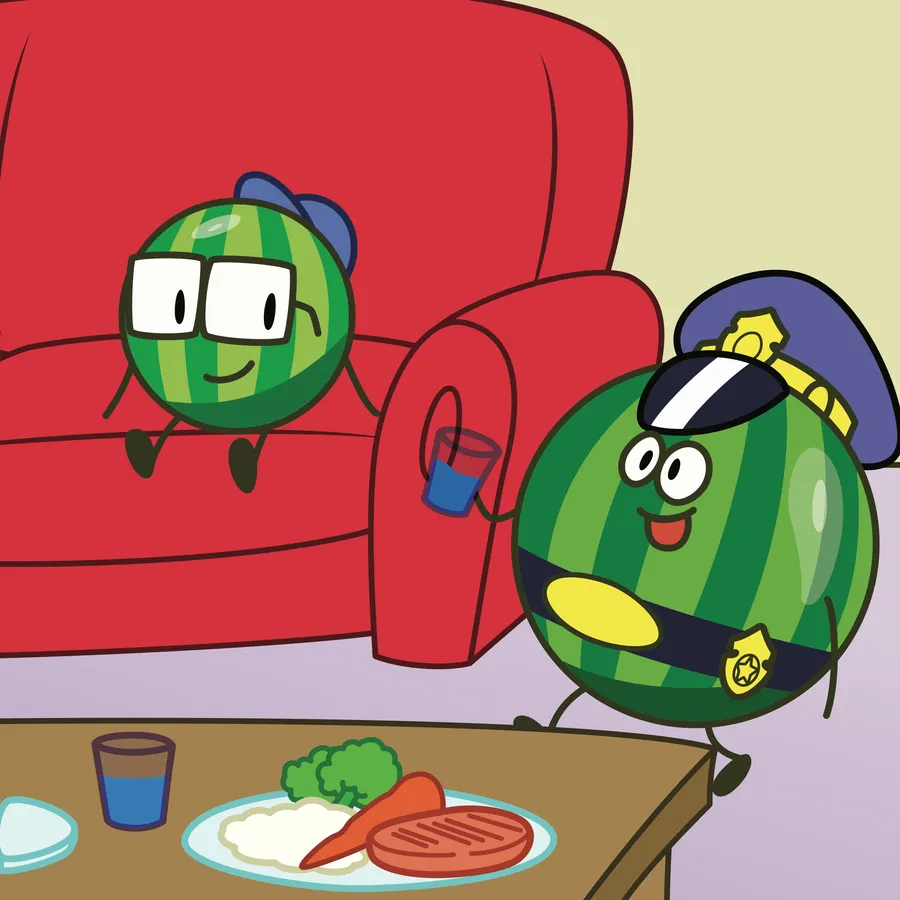
In the book Cambio de Ritmo, El Tigre teaches Sandi and his dad to eat a balanced diet to stay healthy and strong. Do you know where each food goes on the plate?
- 1 Sort
- 2 Build your meal
- 3 To the kitchen
Sort the foods on the plate
Tap a food, then the part of the plate where it goes. On a computer you can also drag it.
0 of 16 foods
For parents and caregivers
How Build Sandi’s plate supports your child’s development
This activity brings the last pages of "Cambio de Ritmo" to the screen: first you play at sorting foods, then you cook as a family. Here we explain what your child learns, how to support them and how to turn everyday meals into a small lesson in healthy habits.
How to play
First your child sorts 16 foods into the three parts of the plate: protein, vegetables and carbohydrates. If they make a mistake, they get a hint. Then they build their own meal with the book’s 2+1+1 rule: two servings of protein, one of vegetables and one of carbohydrates. At the end they can print their plate or share it on WhatsApp to make it at home.
What they are learning
Sorting foods into groups is a concrete way to understand what each one is for: protein helps you grow, vegetables provide nutrients and carbohydrates give energy. It also practices categorizing, a thinking skill they will use in science and math. And by choosing their own meal, they feel part of the family’s decisions.
Ideas to keep going at home
- Ask them to check their plate before eating: which part is missing?
- Take the 2+1+1 rule to the supermarket and let them pick a new vegetable to try.
- Cook the plate they built in the activity together, always with an adult present.
- Talk about how you feel after eating well and exercising, like Sandi and his dad.
Connection to the book
In "Cambio de Ritmo", Sandi and his dad discover with El Tigre that exercise and a balanced diet make them stronger. The 2+1+1 rule and the food cut-out sheet come from the last pages of the book: after playing, read the story together and complete the paper activity too.
See the bookA tip from Mora: play together for a short while, 5 to 10 minutes, and talk when you finish. Screens work best as a starting point for family conversations rather than as a solo activity: real learning happens in the conversation, which is the heart of the Mora method.